

Learn to crochet
How to crochet a doily for beginners
To crochet a doily, use size 10 crochet cotton and a 1.75 mm steel hook, start with a small chain ring or magic ring, and work rounds outward, adding stitches evenly so the piece stays flat. Chain loops create the lace. Join each round with a slip stitch, then wet-block and starch the finished doily.
By the crochetpatterns.io editorial team · Reviewed · Editorial policy
What thread and hook do you need to crochet a doily?
Most doily patterns are written for mercerised cotton crochet thread, which holds a crisp shape and keeps stitch definition. Size 10 is the easiest thread to learn on: it is the thickest common doily thread, so stitches are easier to see and count. Finer threads such as size 20 and size 30 make smaller, more delicate doilies from the same pattern.
You also need a pair of small scissors, a fine tapestry needle for weaving in ends, rustproof pins and a flat surface you can pin into for blocking.
| Thread size | Typical steel hook | Result |
|---|---|---|
| Size 3 | 2.1–2.25 mm | Large, sturdy doilies and placemats |
| Size 10 | 1.5–1.75 mm | The standard doily thread; best for beginners |
| Size 20 | 1.25–1.4 mm | Finer lace, smaller finished doily |
| Size 30 | 1.0–1.25 mm | Delicate lace and many vintage patterns |
How do you start and work a round doily?
A round doily starts at the centre and grows outward in joined rounds, each with more stitches or longer chain loops than the last.
- Chain 6 and join with a slip stitch to form a ring, or make a magic ring for a closed centre.
- Chain 3 (counts as the first double crochet) and work the stitches for round 1 into the ring, as the pattern says.
- Join the round with a slip stitch into the top of the starting chain.
- At the start of each new round, slip stitch to the position the pattern calls for, then chain up to the height of the round.
- Work each round's increases evenly around the circle so the doily stays flat.
- Check the doily lies flat on a table every few rounds before continuing.
- After the last round, fasten off, leaving a 6 inch (15 cm) tail, and weave in all ends along the back of the stitches.
Why is my doily cupping or ruffling?
A doily that cups into a bowl has too few stitches for its size, or your tension is tighter than the designer's; try a steel hook one size larger. A doily that ripples when it isn't meant to has too many stitches or loose chain loops; try a hook one size smaller or shorten your chains slightly. Some vintage patterns ruffle on purpose — ruffled doilies are designed to stand up in waves once starched.
How do you block and starch a crochet doily?
Blocking opens up the lace and sets the final shape; starching keeps it there.
- Soak the doily in cool water for a few minutes, then roll it in a towel to remove excess water.
- Lay it on a blocking board or foam mat and pin the centre first, then each point or loop, working outward in opposite pairs.
- Use a printed circle or grid under the doily to keep the rounds even.
- Spray with fabric starch, or brush with a starch solution for a stiffer finish.
- Leave the doily pinned until completely dry, then remove the pins.
How do you frame a crochet doily?
Block and starch the doily first so it holds its shape. Centre it on a piece of fabric or acid-free mat board in a contrasting colour, then tack it in place with a few small stitches of matching sewing thread at the centre and the outer points rather than glue, so it can be removed later. A shadow-box frame keeps the glass from pressing on the raised stitches.
Patterns to practise on
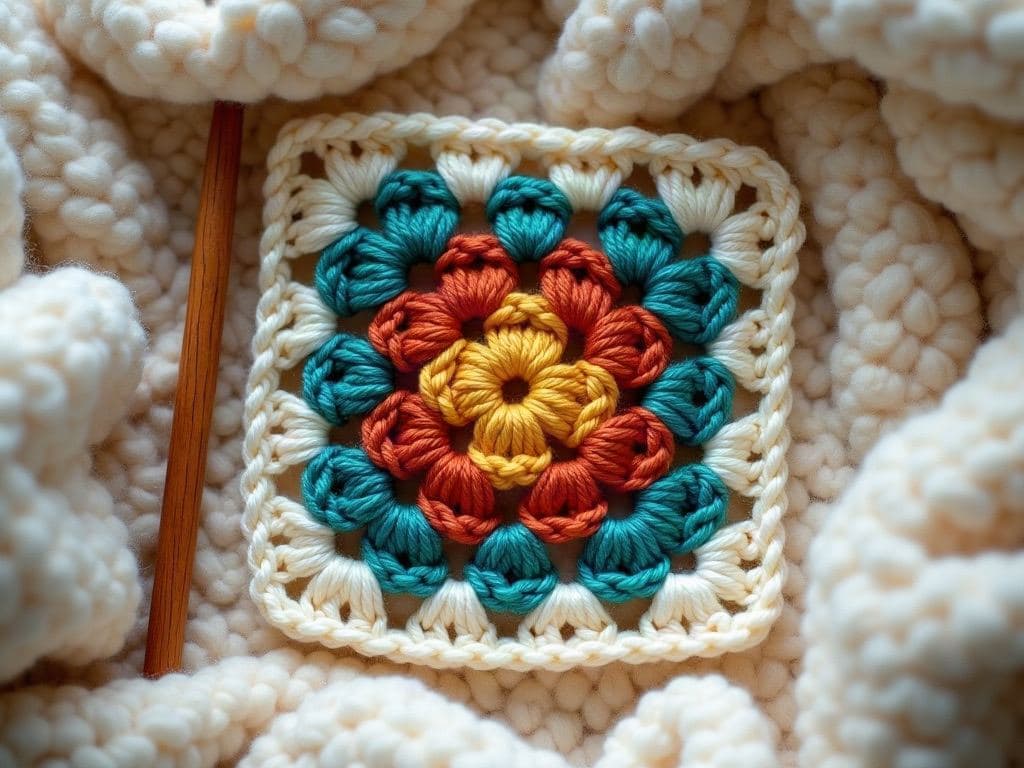
How to crochet a classic granny square
- Skill level
- Beginner
- Yarn weight
- Medium (#4)
- Hook size
- 5 mm hook
- Yardage
- 35 yd
Free pattern
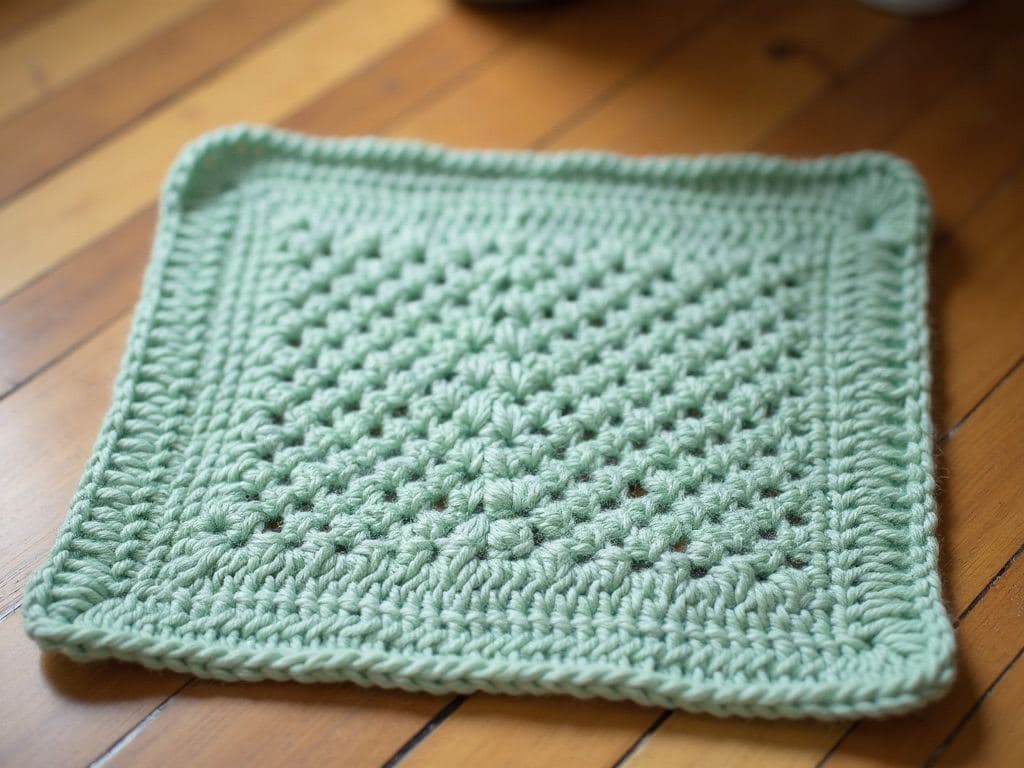
Easy moss stitch crochet dishcloth
- Skill level
- Beginner
- Yarn weight
- Medium (#4)
- Hook size
- 5 mm hook
- Yardage
- 100 yd
Free pattern
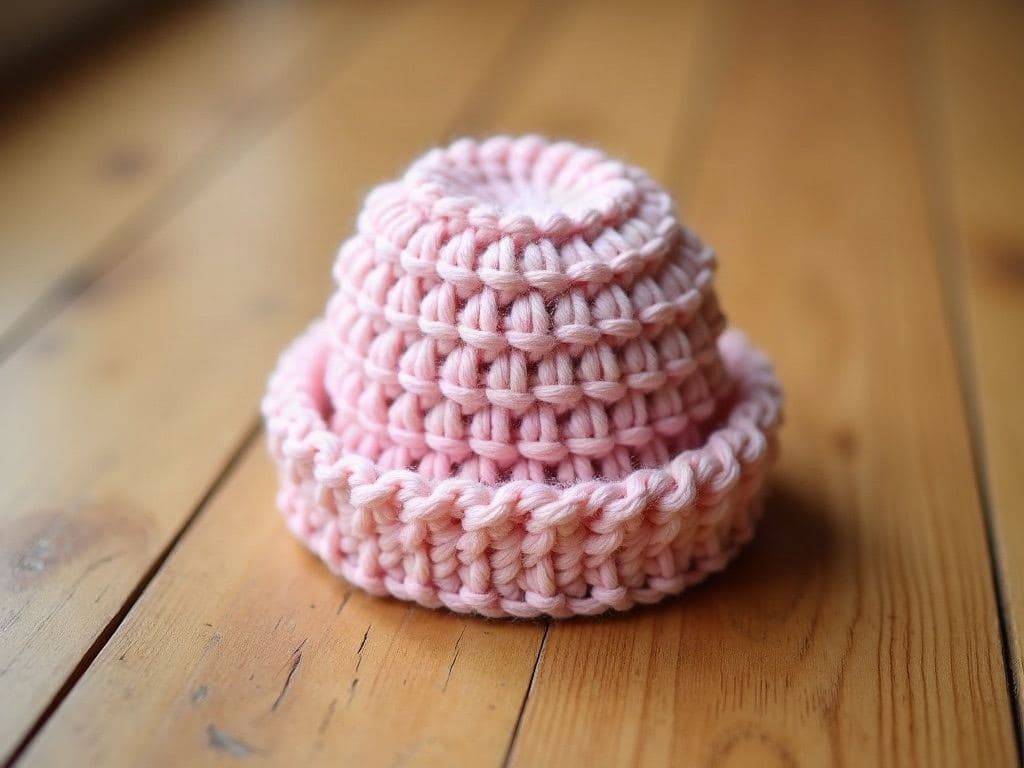
Simple half double crochet baby beanie in the round
- Skill level
- Beginner
- Yarn weight
- Medium (#4)
- Hook size
- 5 mm hook
- Yardage
- 130 yd
Free pattern
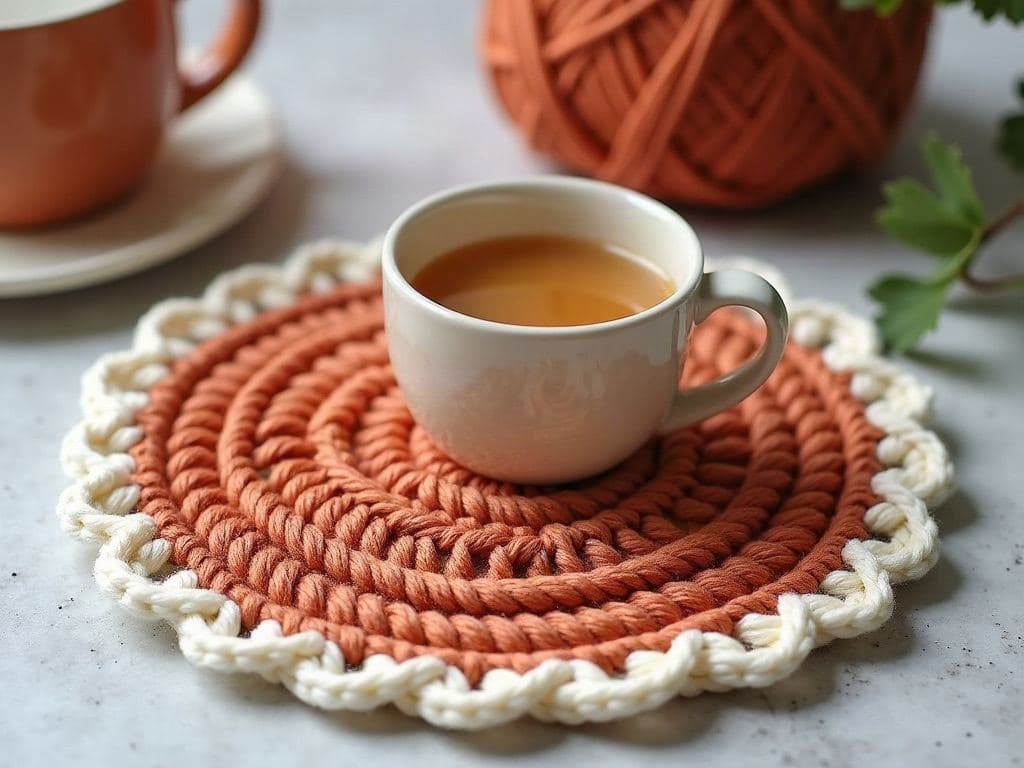
Quick round crochet coaster in cotton
- Skill level
- Beginner
- Yarn weight
- Medium (#4)
- Hook size
- 4.5 mm hook
- Yardage
- 18 yd
Free pattern
Frequently asked questions
Is crocheting a doily hard?
Doilies use basic stitches, but fine thread and small hooks take practice. Start with a small doily in size 10 thread before trying finer vintage patterns.
Can I crochet a doily with yarn?
Yes. Any doily pattern can be worked in yarn with a larger hook; it will be much bigger and softer, which suits a placemat or table centre.
How long does it take to crochet a doily?
A small 8 inch (20 cm) doily in size 10 thread often takes an evening or two; large vintage doilies in fine thread can take weeks.
How do I wash a crochet doily?
Hand wash in cool water with mild soap, rinse, then re-block and starch it to restore the shape.