Free preview · full pattern in the Vintage Crochet Hats, Bags & Accessories
Essuie-Plume Pen Wiper (1847): vintage crochet pattern
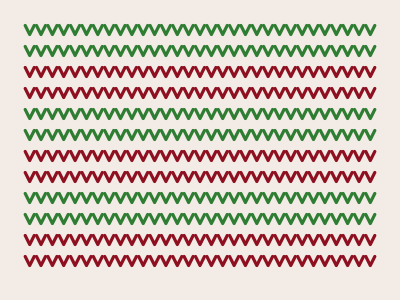
A small round Victorian pen wiper (essuie-plume) in green netting silk, with a green star pattern growing and shrinking on a dark scarlet ground, finished with a fringe-like edge of two rows of open crochet. Originally published as "An Essuie-Plume" in My Crochet Sampler (Miss Lambert) by D. M. Peyser in 1847, it is now in the public domain.
By the crochetpatterns.io editorial team · Updated · Editorial policy · pattern testing in progress
| Detail | Value |
|---|---|
| Skill level | Intermediate |
| Yarn weight | Lace (#0) |
| Yardage | Not printed. (as printed; yardage not given) |
| Hook | 1.5 mm |
| Gauge | Not printed. Work to the size of the article; the book sizes by counted stitches or measurement. |
| Finished size | Not printed. |
| Time | about 5 hours |
Materials
- Silk thread about the thickness of size 10 crochet thread, approximating netting silk, in green and dark scarlet
- Tapestry needle for weaving in (“running”) the ends
- Hook: Start with a 1.5 mm (US steel 8) hook and adjust to suit your thread; no hook size or gauge is printed.
Yarn Kit & Substitution Options
This pattern calls for 350 yards of weight #0 yarn. Select a suggested yarn to see required skeins and estimated cost:
Caron Simply Soft · 100% Acrylic
315 yds per skein · High-yield yardage, silky no-scratch texture
2 skeins required
approx. $$10.98 total
Abbreviations (US terms)
- chain
- single crochet
- double crochet
- stitch
- stitches
- increase
- row
- alternate
- skip
Notes before you start
- Source: "An Essuie-Plume", My Crochet Sampler (Miss Lambert), D. M. Peyser, 1847. Public domain in the USA.
- As printed — materials: plain green netting silk; dark scarlet. Gauge: Not given.
- Modernisation note: Victorian stitch names converted to modern US terms strictly by the book's own definitions (pp. 15–21, 57), not by modern UK equivalents: “plain double crochet”, “plain crochet”, “plain stitch” and “plain stitch double crochet” = sc; “plain single crochet” = sl st; “chain” = ch; “open crochet” = dc with ch 1 over a skipped st; the “double stitches” / “long stitches” of open crochet = dc; “double open crochet” = pairs of dc with an open space; “treble open crochet” = groups of 3 dc alternating with open spaces; “plain stitch open crochet” = ch-5 loops joined by sc to the centre of the loops below; “dividing”, “seam” or “raised” stitch = 2 sc in one st under both loops, stacked; “treble increased stitch” = 3 sc in one st; “double stitch crochet” = sc under both loops; “raised” or “ribbed” crochet and “plain stitch elastic crochet” = sc in back loop only, turning each row; “to increase” = 2 sc in one st; “to decrease” = sc2tog or sk 1; “to make a stitch” = ch 1 at each end of the row; “fasten off” = draw the yarn through the last st; “fasten on” = lay the new end along the work and crochet over both; “run the ends” = weave in ends. Note that the book's “double crochet” is a modern sc, and its “treble” never means a modern tr.
- Modernisation note: The book implies that ordinary plain crochet picks up only one loop of the stitch below (the seam stitch is made “under both loops instead of one”, and “double stitch crochet” takes “both meshes”), but it never says which loop. Instructions say sc. Check: for the period texture, try working through one loop as the book implies.
- Modernisation note: Period wording modernised: “needle” / “crochet needle” written as “hook”; “commence” as “begin”; “unite the ends” / “join both ends together” as “join into a ring” (the book does not name the joining stitch); “a chain and first row” as “ch, then Row 1”; “cheques” as “checks”. The book says “row” even when working round and round; “row” is kept as printed.
- Modernisation note: Printed paragraphs split into one step per row or instruction; no colours, counts or rows added, removed or reordered. Colour-sequence rows are written as “Row 4 (sc): 1 light green, 1 black, 5 red brown …”, meaning that many sc in each colour, in order.
- Modernisation note: Period silks have no exact modern equivalent. The book's hints (p. 22) rank them: crochet silk is “the coarsest” and best for bags; second-sized netting silk is “prettiest for purses”; fine netting silk and reel silk are finer. The modern silk or crochet-thread sizes given are approximations.
- Modernisation note: No hook (needle) size and no gauge is printed — the book names only “steel” or “ivory” needles. The modern starting hook is an approximate suggestion only.
- Modernisation note: No yardage is printed and none is estimated.
- Modernisation note: Colour swatches are approximate modern readings of the period colour names; they are not in the book. “Gold colour” is a golden-yellow yarn, whereas “gold” on its own in the silk designs means metallic gold thread or cord. “Ponceau” is poppy red, “drab” a dull greyish brown, “stone colour” a pale greyish beige, “claret” a deep wine red. By the book's own definitions (p. 24), “chiné” yarn is dyed in two or more colours at intervals along one thread, and “ombré” yarn shades gradually from light to dark in one colour.
- Modernisation note: “Essuie-plume” is French for pen wiper.
- Modernisation note: “Crochet both ends together” written as “join both ends”.
- Modernisation note: Check: the number of increases in the three plain green rows is not stated, nor the number of divisions of the star.
- Modernisation note: Check: “increasing one stitch in each division of the ground” is printed after the last of the three decreasing rows; it is not clear whether it applies to all three rows.
- Modernisation note: “Weave in ends” added.
Row progress: 0 of 3 done (0%)
Stitches
0 of 3 done- Stitch (book's definition): “Plain double crochet,—where two loops are kept on the needle, and the wool drawn through both before the stitch is finished” = single crochet (sc). The book adds that “unless any other stitch be mentioned, the plain, or double crochet stitch, is always to be employed”, so every stitch in these directions is sc unless another stitch is named. A “plain row” is a row of sc in one colour.Mark row complete
- Stitch (book's definition, “Open crochet”): begin with “one plain stitch”; yo, insert hook in the first loop of the chain and draw the yarn through (3 loops on hook), yo and draw through 2 loops, yo and draw through the last 2 loops (= dc); “through this one, make one plain stitch” (= ch 1), then work the next dc in the third loop of the chain (sk 1). Open crochet = sc, *dc, ch 1, sk 1; rep from * — a dc-and-ch-1 mesh (engraving No. 2).Mark row complete
- True or perfect stitch (book's definition): when working in different colours, keep “the stitches directly over each other, without any appearance of the half-stitch” — place each colour stitch exactly above the stitch of the row below.Mark row complete
Working on:
Stitch (book's definition): “Plain double crochet,—where two loops are kept on the needle, and the wool drawn through both before the stitch is finished” = single crochet (sc). The book adds that “unless any other stitch be mentioned, the plain, or double crochet stitch, is always to be employed”, so every stitch in these directions is sc unless another stitch is named. A “plain row” is a row of sc in one colour.
Continue this pattern
The rest of the Essuie-Plume Pen Wiper (1847) pattern is in the Vintage Crochet Hats, Bags & Accessories
Still to come in the full pattern:
- Centre and star
- Edge
- Finishing
Included with 202 patterns for $12 — $0.06 per pattern.
Errata
No corrections have been published for this pattern. Found a mistake? Tell us and we will log the fix here with a date.
Your notes on this pattern
Keep track of the yarn, hook and changes you used. Saved in this browser only — nobody else can see it.
Frequently asked questions
Where is the An Essuie-Plume pattern from?
It was published as "An Essuie-Plume" in My Crochet Sampler (Miss Lambert) by D. M. Peyser in 1847. The publication is in the public domain in the United States; this version is transcribed and modernised by crochetpatterns.io.
What yarn or thread do I need for the An Essuie-Plume?
Silk thread comparable to size 10 crochet thread (period: netting silk). Not printed.
What hook should I use?
Start with a 1.5 mm (US steel 8) hook and adjust to suit your thread; no hook size or gauge is printed. Gauge: Not printed. Work to the size of the article; the book sizes by counted stitches or measurement.