Free preview · full pattern in the Vintage Crochet Hats, Bags & Accessories
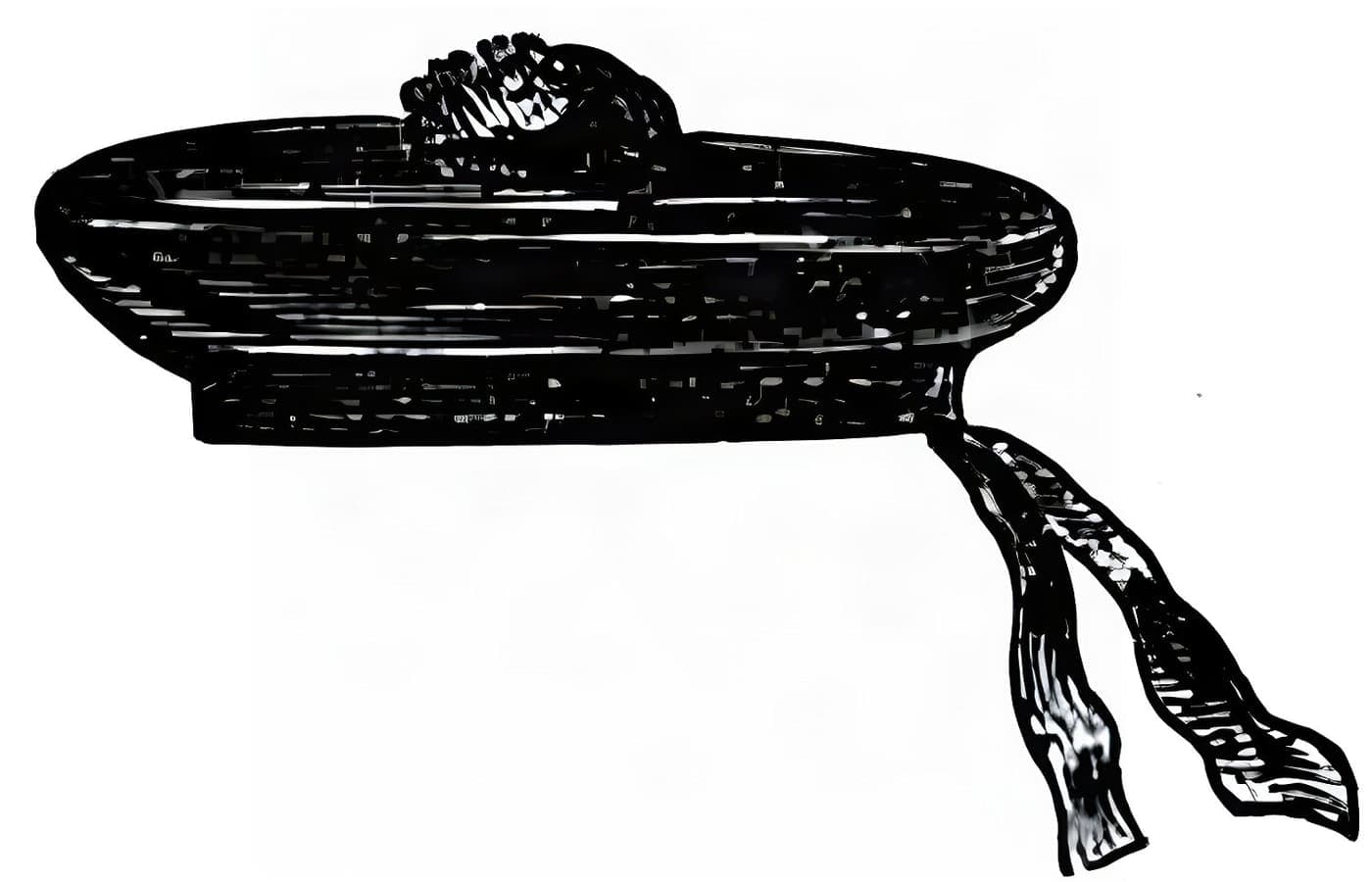
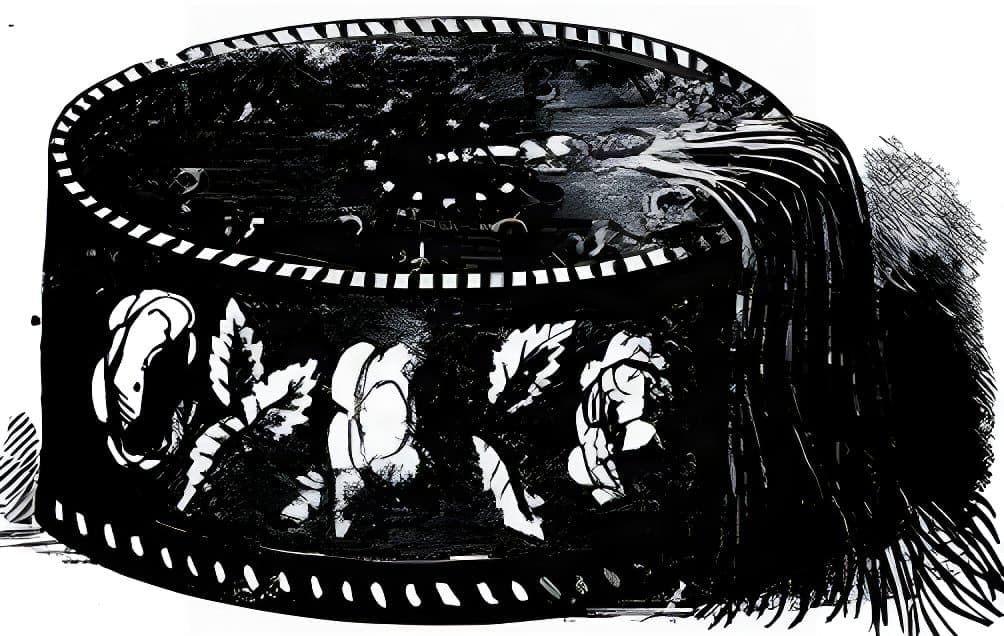
Tam o’Shanter in Crochet (1890): vintage crochet pattern
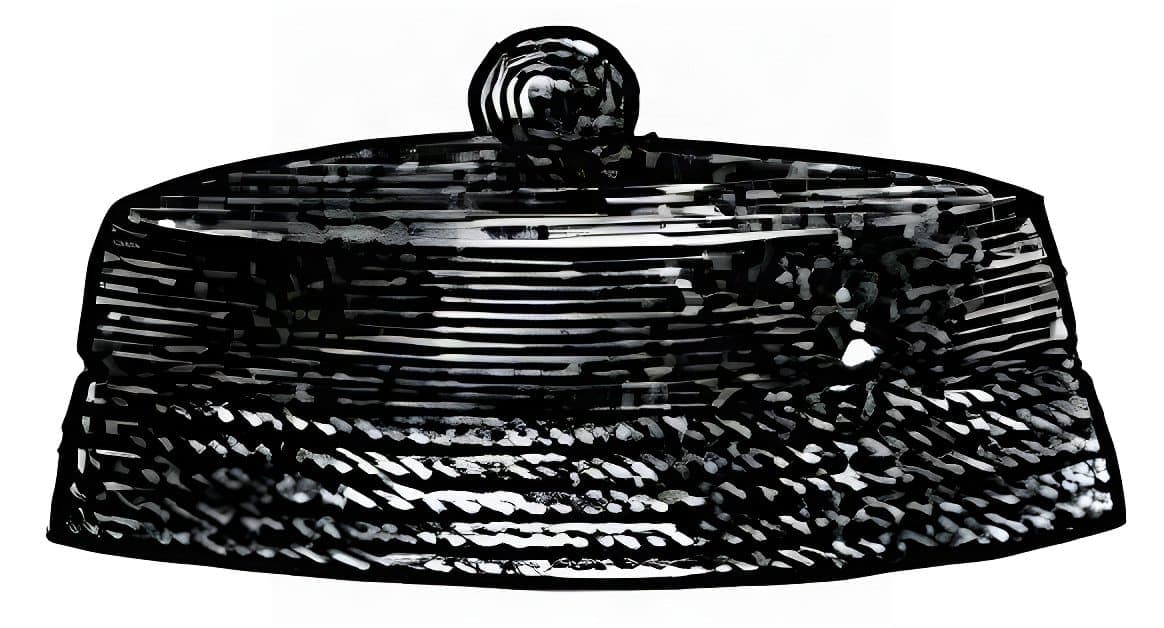
A large flat Tam o’Shanter worked in spiral rounds of single crochet in two alternating colours, increased to 16 inches across and then decreased, finished with a knitted rib band, a lining and a wool tuft. The knitted Tam o’Shanter printed before it in the book (No. 1) is not included.
By the crochetpatterns.io editorial team · Updated · Editorial policy · pattern testing in progress
| Detail | Value |
|---|---|
| Skill level | Intermediate |
| Yarn weight | Super fine (#1) |
| Yardage | one skein of each colour; the skein weight and length are not printed. (as printed; yardage not given) |
| Hook | 2.5 mm |
| Gauge | Not given; the crown should lie flat and measure 16 in (40.5 cm) across before the decreases. |
| Finished size | Crown about 16 in (40.5 cm) across at its widest, then decreased over about 4½ in (11.5 cm); head size not printed. |
| Time | about 5 hours |
Materials
- Superfine (CYC #1) fingering-weight wool (approximate equivalent of the original Peacock A. A. Fingering): one skein each of two contrasting colours
- Crochet hook (original: fine bone crochet hook No. 12)
- 5 knitting needles for the band (size not printed; the book says only "5 knitting needles")
- Thin silk lining fabric; scarlet or contrast wool, a strip of smooth strong card 1½ in (4 cm) wide and fine wire for the tuft
- Hook: Start with about 2.5 mm (US B-1/C-2); no gauge is printed, so change size until the crown lies flat and reaches the printed 16 in (40.5 cm) diameter
Yarn Kit & Substitution Options
This pattern calls for 350 yards of weight #1 yarn. Select a suggested yarn to see required skeins and estimated cost:
Knit Picks Stroll Sock · 75% Superwash Merino, 25% Nylon
231 yds per skein · Durable stitch definition, machine washable
2 skeins required
approx. $$13.98 total
Abbreviations (US terms)
- chain
- single crochet
- slip stitch
- stitch
- stitches
- round
- repeat
- increase
- decrease
- single crochet two together
- loop
Notes before you start
- Source: "Tam O’Shanter in Crochet (No. 2)" (No. 2), The Book of Hats and Caps, Faudel, Phillips & Sons, 1890. Public domain in the USA.
- As printed — materials: two contrasting colours of the Peacock A. A. Fingering, one skein of each; a fine bone crochet hook, No. 12. Gauge: Not given.
- Modernisation note: Victorian British stitch names converted to modern US terms. The book defines "single crochet" (in No. 4, the Dundee Bonnet: "the needle in the next stitch, draw the wool through and through the loop on the hook"), which is a modern slip stitch, so "single crochet" and "single" are written as sl st. The book gives no definition for "double crochet" or "treble", so the standard UK→US conversion is applied: UK double crochet = US single crochet (sc); UK treble = US double crochet (dc).
- Modernisation note: Period wording modernised: "wool" written as "yarn"; "needle" (meaning the crochet hook) written as "hook"; "unite" written as "join with a sl st"; "plain" rounds (no increasing) written as "work even"; "the wool on the needle" written as "yo"; "rows" written as "rounds" where the work is in rounds; "receipt" written as "pattern".
- Modernisation note: Hook numbers are on a period British gauge. A No. 12 wool hook is commonly tabulated as about 2.5 mm on the old UK scale, but Victorian numbering varied between makers, and no stitch gauge is printed — the suggested metric size is a starting point only; work to the printed measurements.
- Modernisation note: Period yarn names (Peacock Fingering, Eider, Andalusian, Japanese silk, netting/purse silk) have no exact modern equivalent; the modern yarn weight given is an approximation based on how these yarns were described at the time.
- Modernisation note: No stitch gauge is printed; the book sizes its caps by measurement (diameter or head size) instead.
- Modernisation note: Long printed paragraphs split into one row, round or step per line; stitch order unchanged.
- Modernisation note: UK "double crochet" written as sc (the only crochet stitch named in this pattern). "Increase" written as "inc" (2 sc in one st). The decrease "taking up the 1st on the needle, then the 2nd, and working the two as one" is a single crochet two together and is labelled sc2tog.
- Modernisation note: The book calls the first step the chain ring and starts numbering at "2nd row"; the ring is labelled Rnd 1 to keep the printed numbers.
- Modernisation note: The tuft method is printed in the knitted cap (No. 1) and referred to here ("a tuft made in the same manner as directed in the receipt for a Knitted Cap"); it is copied into the finishing so the pattern can be followed on its own. The cardboard blocking step is also from No. 1 and is marked as such.
- Modernisation note: Check: the number of sc in Rnd 2 (worked into the ch-8 ring) is not printed.
- Modernisation note: Check: "10th and 3 next rows—No increasings. Repeat these 5 rows 5 more times" ends at round 38, but the next printed round is the 34th (repeating Rnds 9–13 four more times, or Rnds 10–13 five times, would end at round 33). Kept as printed; the printed 34th-round label is kept.
- Modernisation note: Check: the book does not say whether the alternating colours of Rnd 4 continue through the crown; the band is worked "with one colour only", which suggests both colours are used throughout. Kept as printed.
- Modernisation note: Check: the band is knitted ("1 purl, 1 plain"), not crocheted, and no needle size or stitch count is printed. Kept as printed; "plain" written as "knit" and "cast off" as "bind off".
- Modernisation note: Metric conversions added.
Row progress: 0 of 11 done (0%)
Crown
0 of 11 done- Rnd 1: With one colour only, ch 8, join with a sl st to form a ring.Mark row complete
- Rnd 2: Work in sc.Mark row complete
- Rnd 3: Work 2 sc in every st.Mark row complete
- Rnd 4: Work each st in alternate colours, carrying the yarn not in use at the back from one st to the next, and inc in every 3rd st.Mark row complete
- Rnd 5: Work even.Mark row complete
- Rnd 6: Inc in every 3rd st.Mark row complete
- Rnds 7–8: Work even.Mark row complete
- Rnd 9: Inc in every 3rd st.Mark row complete
- Rnds 10–13: Work even. Rep these 5 rounds 5 more times.Mark row complete
- Rnd 34: Inc in every 6th st. Work 4 rounds even. Rep these 5 rounds until the work measures 16 in (40.5 cm) across.Mark row complete
- Work 10 more rounds even.Mark row complete
Working on:
Rnd 1: With one colour only, ch 8, join with a sl st to form a ring.
Continue this pattern
The rest of the Tam o’Shanter in Crochet (1890) pattern is in the Vintage Crochet Hats, Bags & Accessories
Still to come in the full pattern:
- Decreasing
- Band (knitted)
- Finishing
Included with 202 patterns for $12 — $0.06 per pattern.
Errata
No corrections have been published for this pattern. Found a mistake? Tell us and we will log the fix here with a date.
Your notes on this pattern
Keep track of the yarn, hook and changes you used. Saved in this browser only — nobody else can see it.
Frequently asked questions
Where is the Tam O’Shanter in Crochet (No. 2) pattern from?
It was published as "Tam O’Shanter in Crochet (No. 2)" in The Book of Hats and Caps by Faudel, Phillips & Sons in 1890. The publication is in the public domain in the United States; this version is transcribed and modernised by crochetpatterns.io.
What yarn or thread do I need for the Tam O’Shanter in Crochet (No. 2)?
super fine (#1) yarn. Not printed — one skein of each colour; the skein weight and length are not printed.
What hook should I use?
Start with about 2.5 mm (US B-1/C-2); no gauge is printed, so change size until the crown lies flat and reaches the printed 16 in (40.5 cm) diameter Gauge: Not given; the crown should lie flat and measure 16 in (40.5 cm) across before the decreases.