Free preview · full pattern in the Vintage Crochet Hats, Bags & Accessories
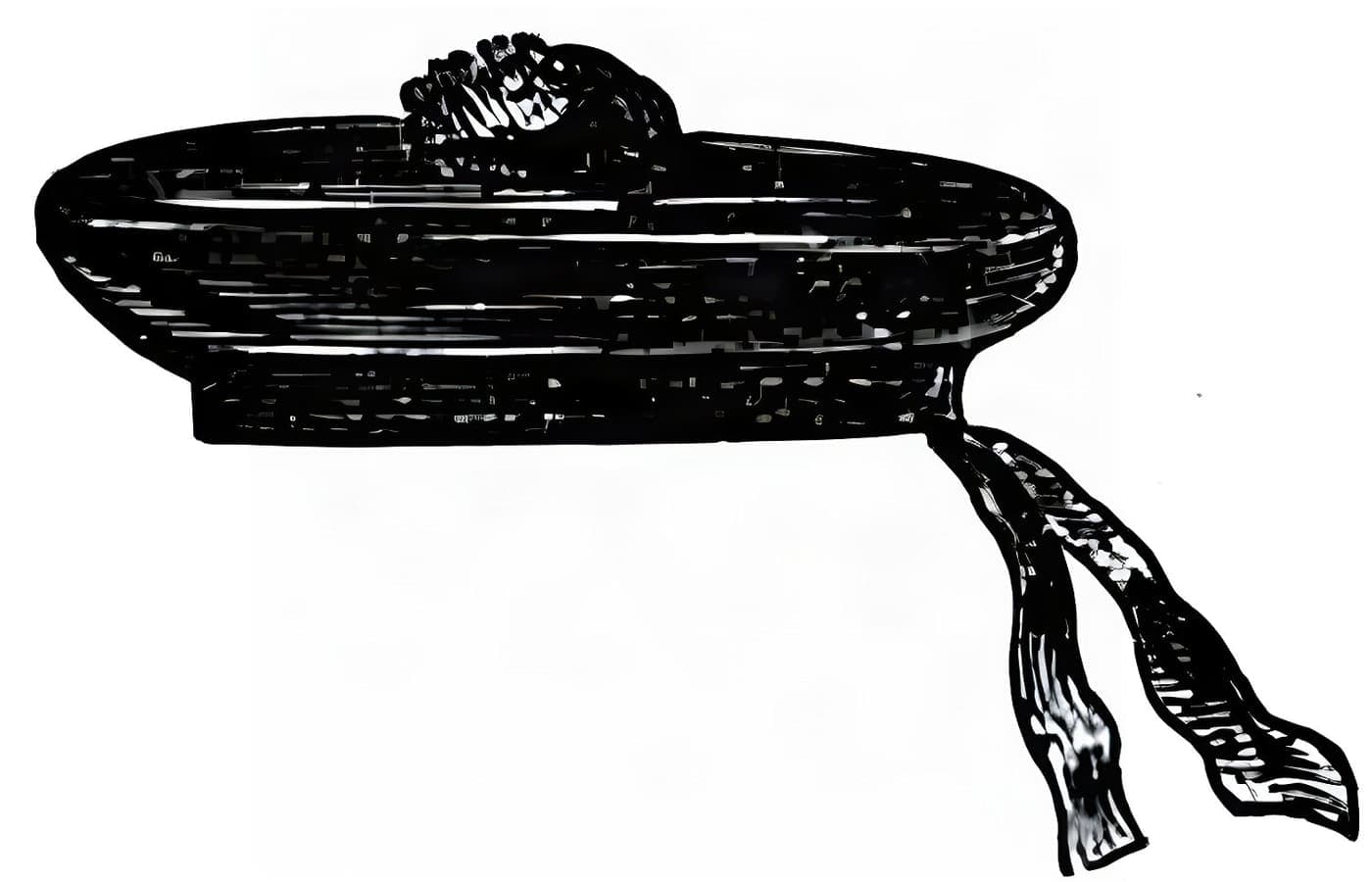
Jack Tar Cap for a Man (1890): vintage crochet pattern
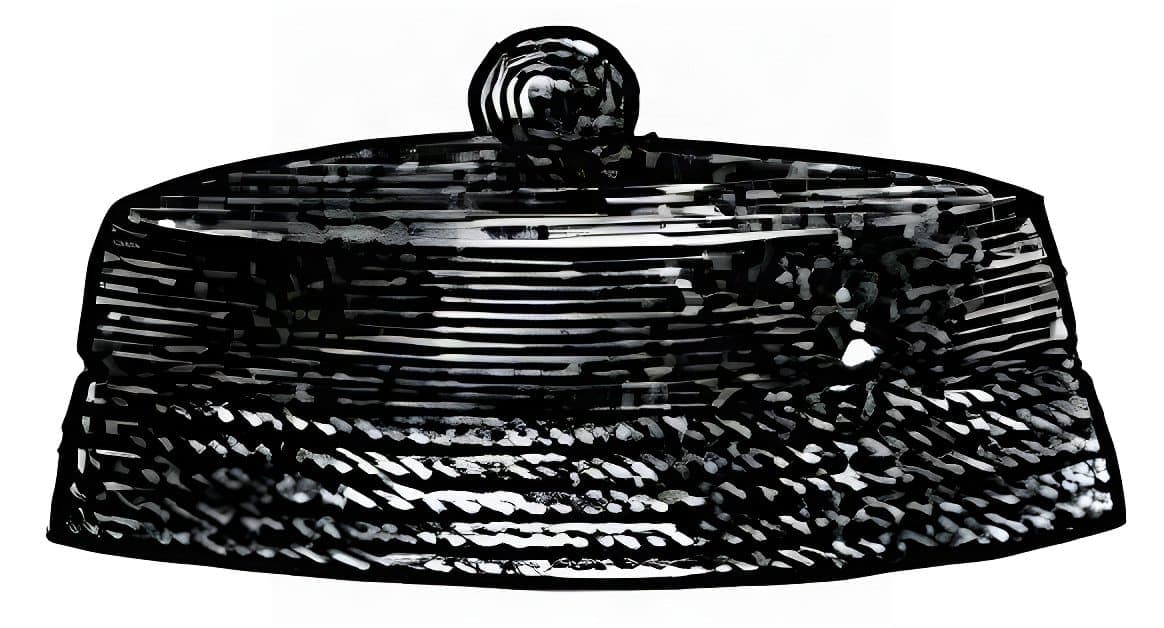
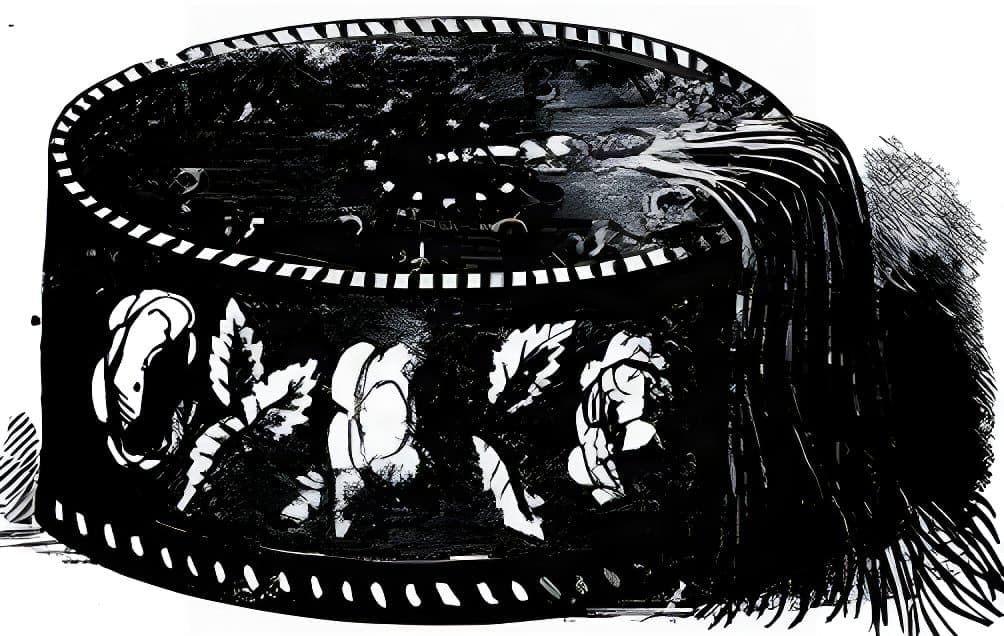
A sailor-style cap in loop crochet “in imitation of plush”: the top is built from wedges of short rows, edged with rounds of loop crochet, decreased for a narrow under-rim and finished with a single crochet head band into which a name or ship can be worked; the loops are cut and trimmed to look like fur.
By the crochetpatterns.io editorial team · Updated · Editorial policy · pattern testing in progress
| Detail | Value |
|---|---|
| Skill level | Advanced |
| Yarn weight | Super fine (#1) |
| Yardage | 5 oz (142 g) of Peacock Fingering; the book says about the same weight of Peacock Lady Betty, or more of Fleecy. (as printed; yardage not given) |
| Hook | 2.5 mm |
| Gauge | Not given. |
| Finished size | Size not printed; the top is worked until it lies flat, and the head band is decreased to the wearer's head measurement. Under-rim not more than 1 in (2.5 cm) deep. |
| Time | about 6 hours |
Materials
- Superfine (CYC #1) fingering-weight wool (approximate equivalent of the original Peacock Fingering): 5 oz (142 g). The book suggests light pink, blue or cream for fancy dress; maroon or dark grey for winter wear. Red or gold for lettering.
- Crochet hook (original: No. 12 hook)
- Quilted lining; lining muslin (3 layers) or leather for the brim; strings (ribbons) for the back; silk for the tassel; squared (point) paper for charting letters
- Sharp scissors
- Hook: Start with about 2.5 mm (US B-1/C-2); no gauge is printed — work to the book's instruction that the top lies flat and the band fits the head
Yarn Kit & Substitution Options
This pattern calls for 350 yards of weight #1 yarn. Select a suggested yarn to see required skeins and estimated cost:
Knit Picks Stroll Sock · 75% Superwash Merino, 25% Nylon
231 yds per skein · Durable stitch definition, machine washable
2 skeins required
approx. $$13.98 total
Abbreviations (US terms)
- chain
- single crochet
- slip stitch
- stitch
- stitches
- repeat
- round
- yarn over
- loop
- decrease
- together
Notes before you start
- Source: "Jack Tar, for a Man (No. 3)" (No. 3), The Book of Hats and Caps, Faudel, Phillips & Sons, 1890. Public domain in the USA.
- As printed — materials: 5 oz. of Peacock Fingering and a No. 12 hook; about the same quantity of Peacock Lady Betty, and more if Fleecy is used. Gauge: Not given.
- Modernisation note: Victorian British stitch names converted to modern US terms. The book defines "single crochet" (in No. 4, the Dundee Bonnet: "the needle in the next stitch, draw the wool through and through the loop on the hook"), which is a modern slip stitch, so "single crochet" and "single" are written as sl st. The book gives no definition for "double crochet" or "treble", so the standard UK→US conversion is applied: UK double crochet = US single crochet (sc); UK treble = US double crochet (dc).
- Modernisation note: Period wording modernised: "wool" written as "yarn"; "needle" (meaning the crochet hook) written as "hook"; "unite" written as "join with a sl st"; "plain" rounds (no increasing) written as "work even"; "the wool on the needle" written as "yo"; "rows" written as "rounds" where the work is in rounds; "receipt" written as "pattern".
- Modernisation note: Hook numbers are on a period British gauge. A No. 12 wool hook is commonly tabulated as about 2.5 mm on the old UK scale, but Victorian numbering varied between makers, and no stitch gauge is printed — the suggested metric size is a starting point only; work to the printed measurements.
- Modernisation note: Period yarn names (Peacock Fingering, Eider, Andalusian, Japanese silk, netting/purse silk) have no exact modern equivalent; the modern yarn weight given is an approximation based on how these yarns were described at the time.
- Modernisation note: No stitch gauge is printed; the book sizes its caps by measurement (diameter or head size) instead.
- Modernisation note: Long printed paragraphs split into one row, round or step per line; stitch order unchanged.
- Modernisation note: UK "double crochet" written as sc and "plain double crochet" as "plain sc". Row 3 "single crochet" written as sl st, following the book's own definition of single crochet in No. 4. "Work every 5th and 6th stitches as one" kept as printed ("work … together as one").
- Modernisation note: "Foundation" label added for the chain. "Draw the loops on the needle through the double crochet loop" written as "through the sc loop". "3 doubles" (of muslin) written as "3 layers". The tassel note ("made in the same way as the tuft") refers to No. 1; the card-and-wire method is summarised.
- Modernisation note: Check: the loop stitch in Row 2 ("wind the wool over the hook and round the 1st finger of the left hand twice … finish as usual") is described only briefly; "finish as usual" presumably means completing the stitch as a sc. Kept as printed.
- Modernisation note: Check: the book numbers the next row "6th row" after Rows 1–3 plus two repeats, counting each loop row and its return row as one. Kept as printed.
- Modernisation note: Check: "until all are raised" is not explained; presumably each short-row step adds 4 sts until all 40 foundation sts are worked. How the top is "joined together" is not described.
- Modernisation note: Check: the stitch for the 6 under-rim decrease rounds is not stated (loop crochet or sc), nor how the ordinary-hat decrease is worked; kept as printed.
- Modernisation note: Check: the raised lettering stitch is described only in words and has no modern name; kept as printed.
- Modernisation note: Metric conversions added.
Row progress: 0 of 11 done (0%)
Top
0 of 11 done- Foundation: Ch 40.Mark row complete
- Row 1: Sc across.Mark row complete
- Row 2 (loop row): Insert the hook in the first st, wind the yarn over the hook and round the first finger of the left hand twice, draw the loops on the hook through the sc loop, and finish as usual. Work the whole row in this manner.Mark row complete
- Row 3: Turn and work in sl st.Mark row complete
- Rows 2 and 3 are worked throughout; rep them twice more. From here on, a loop row plus its sl st row is called one row.Mark row complete
- Row 6: Work 8 sts, turn, work back.Mark row complete
- Row 7: Work 8, and 4 more on the last long row, turn, work back.Mark row complete
- Row 8: Work 12, and 4 more, turn, work back.Mark row complete
- Work in this manner until all 40 sts are raised, then work 3 more whole rows over the 40 sts.Mark row complete
- Rep from Row 6 until the work lies flat on the table and meets easily. The book notes some workers repeat it 9 more times, perhaps more for a tight worker.Mark row complete
- Join the top together.Mark row complete
Working on:
Foundation: Ch 40.
Continue this pattern
The rest of the Jack Tar Cap for a Man (1890) pattern is in the Vintage Crochet Hats, Bags & Accessories
Still to come in the full pattern:
- Outer Edge
- Under Rim and Head Band
- Lettering (optional)
- Finishing
Included with 202 patterns for $12 — $0.06 per pattern.
Errata
No corrections have been published for this pattern. Found a mistake? Tell us and we will log the fix here with a date.
Your notes on this pattern
Keep track of the yarn, hook and changes you used. Saved in this browser only — nobody else can see it.
Frequently asked questions
Where is the Jack Tar, for a Man (No. 3) pattern from?
It was published as "Jack Tar, for a Man (No. 3)" in The Book of Hats and Caps by Faudel, Phillips & Sons in 1890. The publication is in the public domain in the United States; this version is transcribed and modernised by crochetpatterns.io.
What yarn or thread do I need for the Jack Tar, for a Man (No. 3)?
super fine (#1) yarn. Not printed — 5 oz (142 g) of Peacock Fingering; the book says about the same weight of Peacock Lady Betty, or more of Fleecy.
What hook should I use?
Start with about 2.5 mm (US B-1/C-2); no gauge is printed — work to the book's instruction that the top lies flat and the band fits the head Gauge: Not given.