

Crochet technique
Join As You Go
Join as you go is a crochet technique that attaches motifs such as granny squares while working the final round of each new square. Slip stitches or single crochets link the new square to finished neighbours at corners and chain spaces. The method removes a separate sewing step.
By the crochetpatterns.io editorial team · Reviewed · Editorial policy
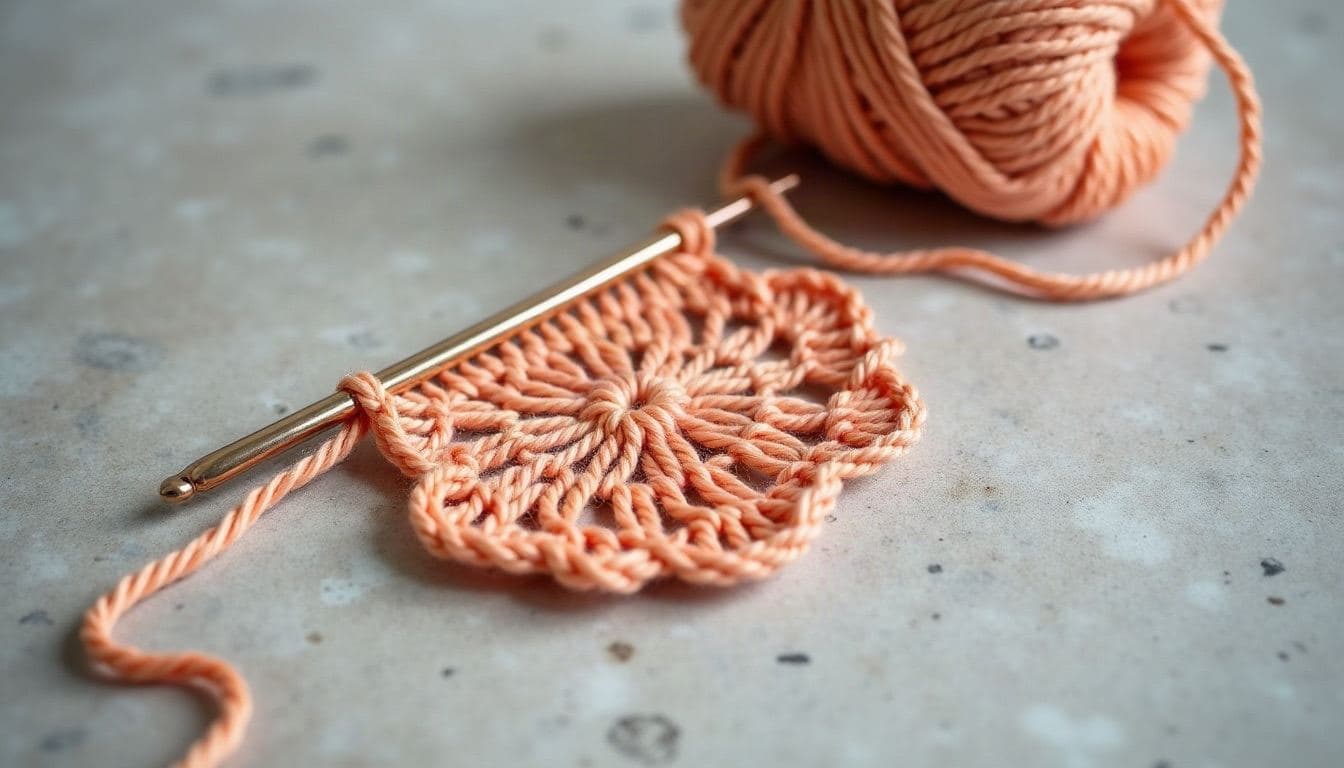
How to get started with join as you go
- Complete the first square fully.
- Work the second square up to the final round.
- At the first shared corner, work half of the corner stitches, then sl st into the corner space of the finished square.
- Complete the corner stitches on the new square.
- Replace each ch 1 along the joining edge with a sl st into the matching space on the finished square.
- Finish the remaining sides of the new square normally.
How do you join granny squares as you go?
Granny squares are joined as you go by replacing chains on the final round with slip stitches into matching spaces of an adjacent finished square.
Lay squares out in the final layout before starting so colours are placed correctly.
Is join as you go better than sewing?
Join as you go is faster than sewing and creates a flexible, almost invisible join, but it requires planning the layout in advance.
Sewing or slip stitch joining after all squares are made allows rearranging and is easier for mixing colours.
| Method | Visibility | Flexibility | Planning needed |
|---|---|---|---|
| Join as you go | Low | High | High |
| Whip stitch | Low–medium | Medium | Low |
| Slip stitch seam | Ridge visible | Low | Low |
| Flat braid join | Decorative | High | Low |
How do you join squares seamlessly?
Squares are joined most seamlessly with a mattress stitch or invisible whip stitch through the back loops only.
Blocking all squares to the same size before joining makes the seams line up evenly.
Frequently asked questions
Can you join as you go with any motif?
Most motifs with chain spaces on the last round work.
Does join as you go leave a ridge?
No, the join is nearly flat.
Can join as you go be undone?
Yes, but it is harder than removing a sewn seam.